This article compares three popular lab chair materials — polyurethane, PU foam, and plastic — with a focus on hygiene, durability, and comfort. Learn why the industrial polyurethane with chrome foot ring and casters adjustable laboratory chair leads in performance.
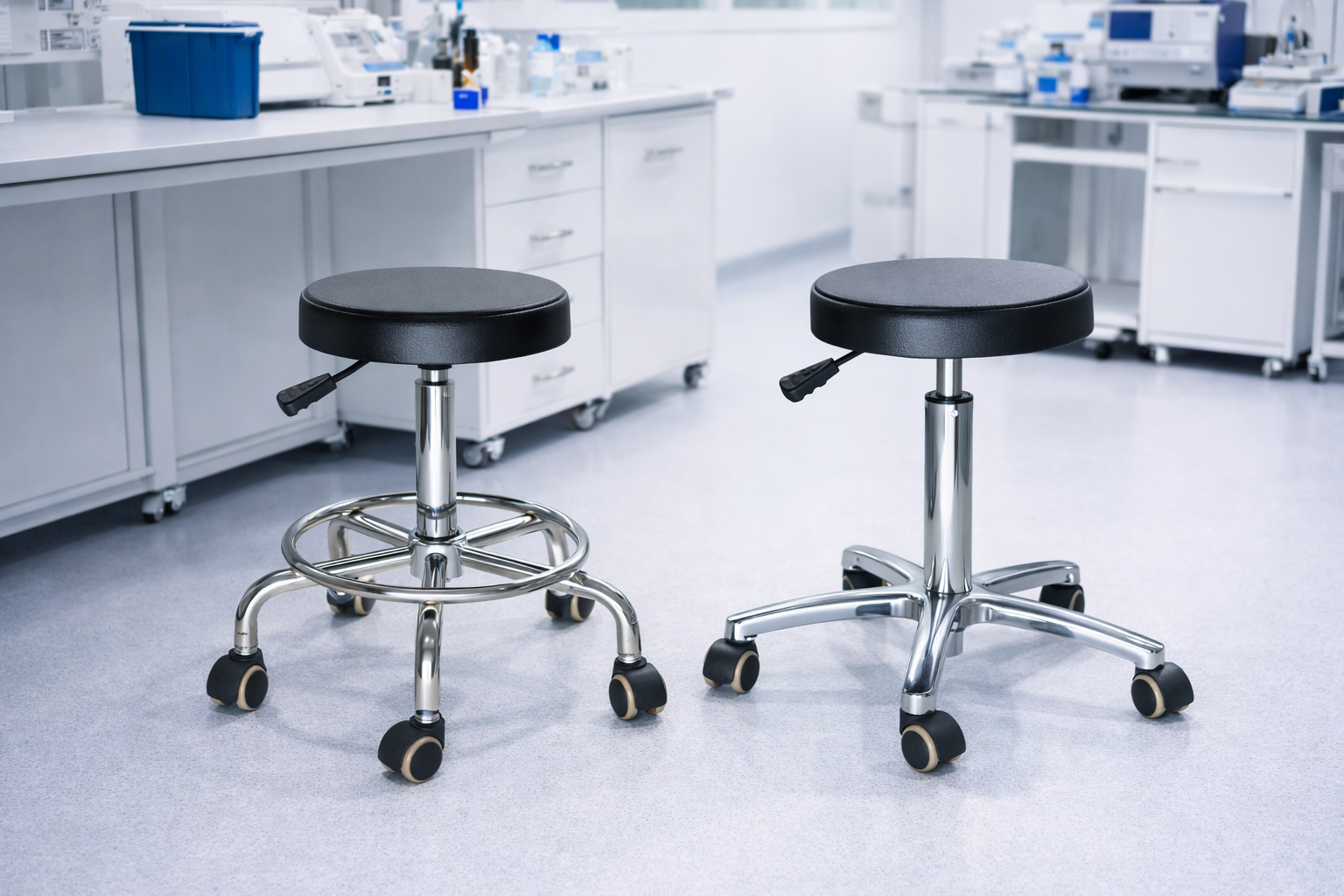
When selecting materials for laboratory seating, especially in technical or medical environments, durability, comfort, and hygiene play critical roles. Among the most commonly used materials are polyurethane (solid), PU foam, and plastic. Understanding their properties helps labs choose the right seating for long-term use.
1. Polyurethane: Rigid, Durable, and Cleanroom-Friendly
Solid polyurethane is a non-porous, highly durable material known for its chemical resistance, easy-to-clean surface, and structural strength. This makes it a leading choice for labs requiring strict sanitation and durability standards. Products like the industrial polyurethane with chrome foot ring and casters adjustable laboratory chair use solid molded polyurethane for the seat and back, ensuring long life and easy maintenance.
2. PU Foam: Soft, Comfortable, but Less Durable
PU (polyurethane) foam is commonly used in office chairs and some lab stools for its comfort. However, it can absorb moisture and chemicals, surface wears faster over time, and it is not ideal for sterile environments. While PU foam offers a soft seating experience, it’s less suitable for high-use or high-cleanliness labs. Compared to the industrial polyurethane with chrome foot ring and casters adjustable laboratory chair, which maintains form and function under repeated sanitization, PU foam chairs tend to degrade faster.
3. Plastic: Economical but Limited Performance
Plastic chairs are affordable and lightweight, but they lack ergonomic flexibility, are prone to cracking under stress, and don’t offer sufficient chemical resistance. For short-term or general-purpose applications, plastic may suffice. However, in controlled environments like pharmaceuticals or biosciences, plastic chairs fail to meet durability and hygiene expectations. The industrial polyurethane with chrome foot ring and casters adjustable laboratory chair outperforms plastic options in every category, from chemical resistance to ergonomic support.
READ MORE