This article highlights the importance of anti-static seating in sensitive environments, focusing on the industrial polyurethane with chrome foot ring and casters adjustable laboratory chair.
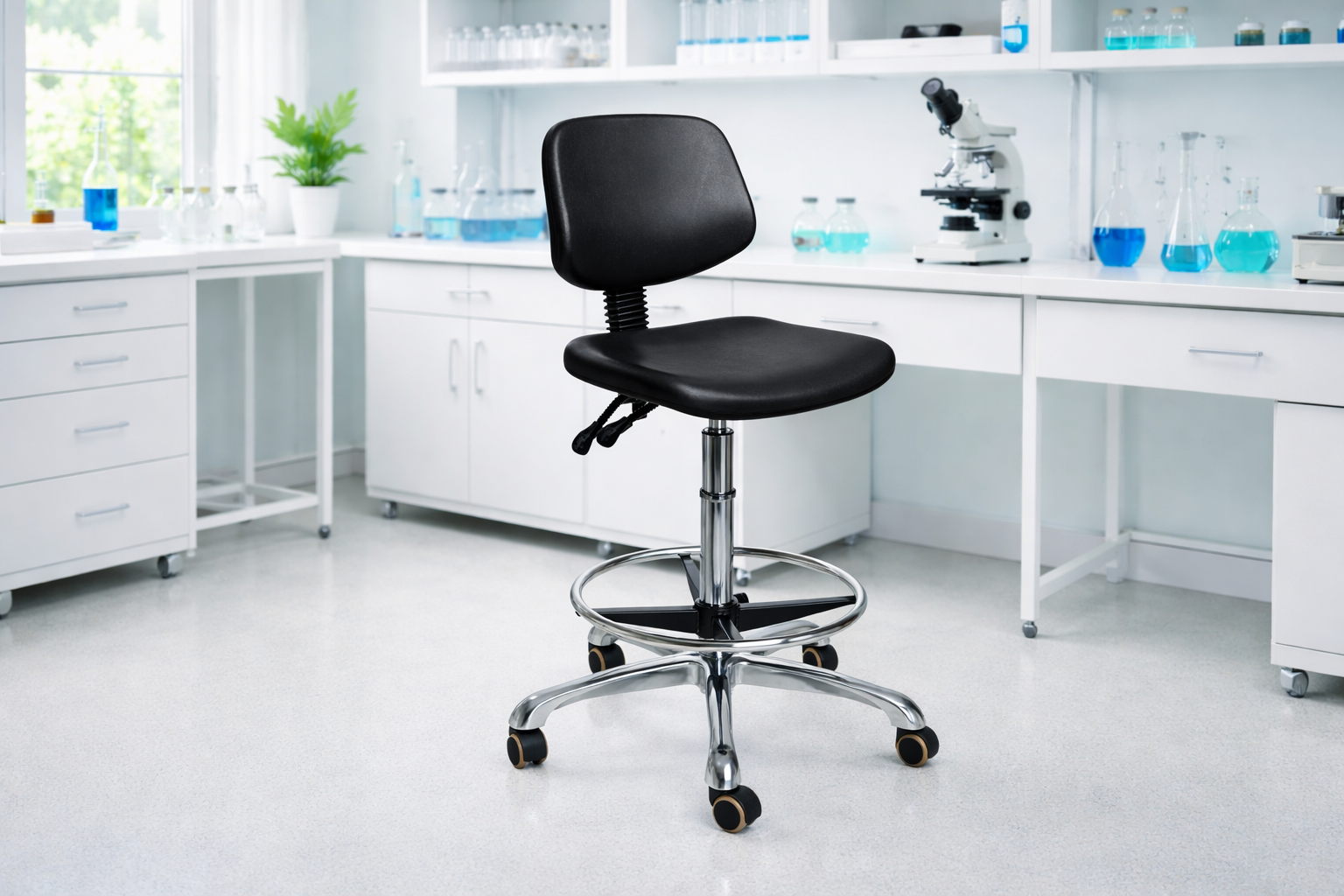
In electronics, cleanroom, and laboratory industries, electrostatic discharge (ESD) can lead to product defects, equipment malfunction, or even safety hazards. Choosing anti-static furniture is vital to protect sensitive components and workers. The industrial polyurethane with chrome foot ring and casters adjustable laboratory chair offers essential ESD protection along with ergonomic support.
1. Understanding Electrostatic Discharge Risks
ESD occurs when built-up static electricity suddenly transfers to another object. In electronic production or testing labs, this can damage microchips or precision equipment. Anti-static chairs help prevent these events by dissipating static safely.
2. ESD-Safe Materials and Construction
The industrial polyurethane with chrome foot ring and casters adjustable laboratory chair includes conductive components such as PU seat materials and metal parts. These materials create a path to ground, allowing static charges to dissipate harmlessly.
3. Grounding Through Casters
Casters on ESD-safe chairs are specially designed with conductive paths. They maintain continuous contact with grounded flooring systems. This model's ESD-compatible casters ensure safe and effective grounding.
4. Cleanroom Compatibility
In cleanrooms, particle shedding must be minimized. PU surfaces emit fewer particles than fabric or foam. The seamless design of this chair reduces contamination risk while meeting ESD requirements.
5. Dual Functionality
This chair not only provides anti-static protection but also offers ergonomic features like height adjustability and lumbar support. The combination of safety and comfort enhances worker focus and reduces fatigue.
Conclusion
The industrial polyurethane with chrome foot ring and casters adjustable laboratory chair is a reliable solution for environments where ESD control and cleanliness are critical. Investing in anti-static seating improves product quality, worker safety, and compliance.
READ MORE